
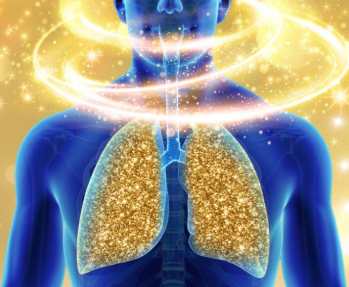
“Glitter lung” was originally a fictional condition created by The Onion as a satire about art teachers supposedly suffering lung damage from constant exposure to craft glitter. While meant as a joke, the idea loosely mirrors real health risks.
Glitter lung is a serious condition that can occur when fine glitter particles are inhaled into the lungs. It might sound unusual, but a real case in Argentina shows how dangerous it can be—especially for young children.
A 3-year-old girl was taken to the hospital after accidentally inhaling a large amount of glitter dust while someone in her home was decorating. The glitter also got into her eyes, onto her skin, and she swallowed some of it. Soon after, she developed breathing difficulties, coughing, vomiting, and abdominal pain. Her condition worsened when parts of her skin turned blue due to low oxygen levels.
Doctors diagnosed her with severe complications, including subcutaneous emphysema, where air becomes trapped under the skin, and a pneumothorax, which is caused by air leaking into the space around the lungs. These conditions made it difficult for her to breathe and required immediate medical attention. This case highlights how glitter lung can quickly become a life-threatening issue.
The medical team treated her with antibiotics, oxygen therapy, and mechanical ventilation for seven days. After stabilizing, she was discharged from the hospital. However, follow-up exams months later showed lasting lung damage, including bronchiectasis, a condition that can lead to ongoing respiratory infections. This shows that glitter lung can have long-term health effects even after initial recovery.
Glitter can be harmful because it often contains metals like copper and zinc. While these are normally safe in small amounts, they can become toxic when inhaled or ingested as fine particles. Ultra-fine glitter is especially dangerous because it can reach deep into the lungs and even enter the bloodstream.
Children are most at risk of developing glitter lung because their bodies are smaller and more sensitive. There have been other similar cases, including children who became ill after ingesting decorative glitter or dust products. Some developed lung inflammation or metal poisoning, requiring urgent medical treatment.
Health authorities warn against using non-edible glitter in food or around children. Experts are also calling for stricter regulations on ultra-fine glitter products, which are commonly found in crafts, cosmetics, and paints.